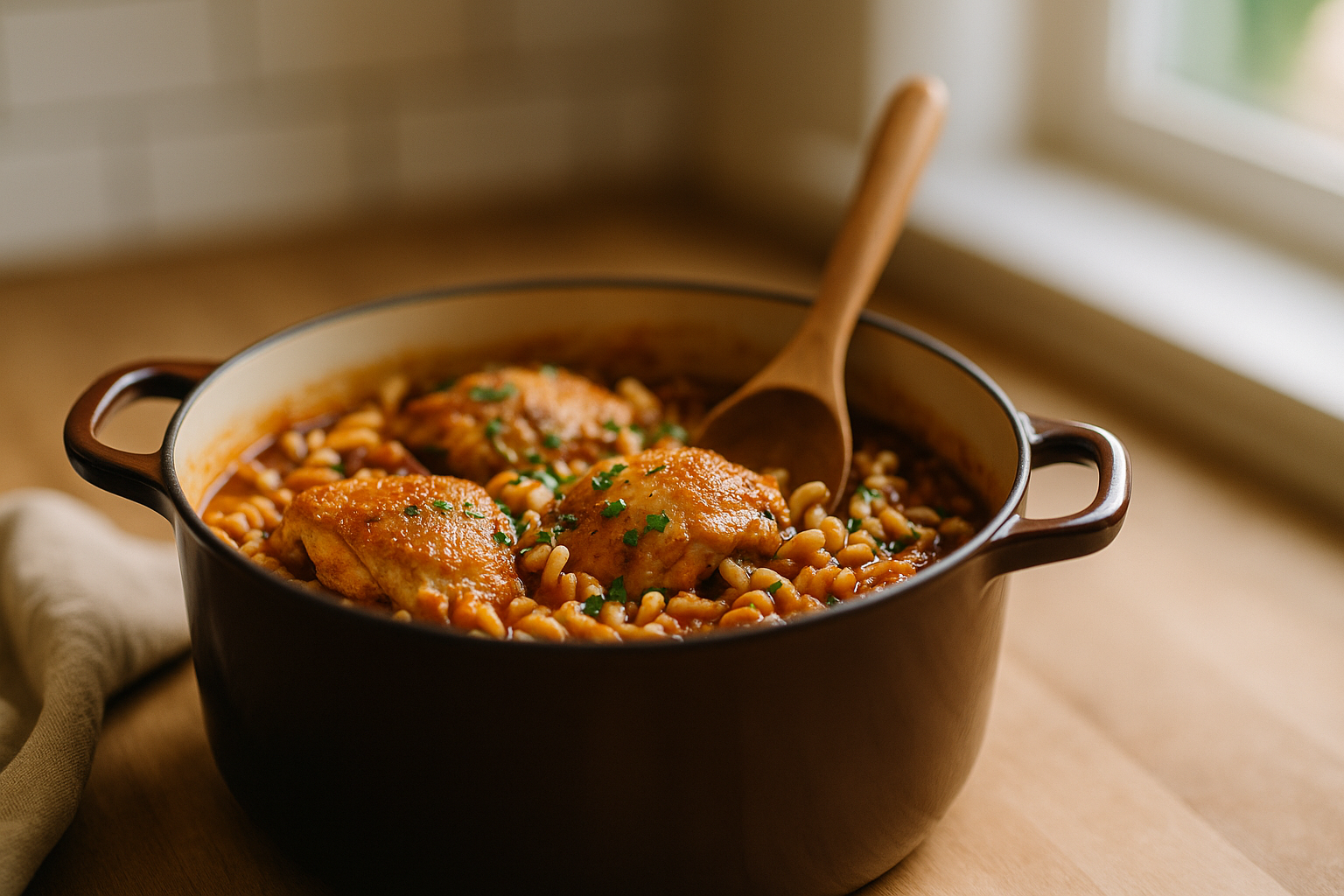
Your sink is piled with dishes, the stovetop looks like a crime scene, and you’ve used every pot in the kitchen. Meanwhile, your dinner is only halfway decent. There’s a better way to cook that delivers incredible flavor without turning your kitchen into a disaster zone. One-pot cooking isn’t just about convenience – it’s a technique that actually creates deeper, more complex flavors than traditional multi-pot methods.
The magic happens when ingredients cook together, building layers of flavor that simply can’t develop when everything is prepared separately. Proteins release their juices into the cooking liquid, vegetables caramelize in rendered fats, and aromatics infuse every component of the dish. This approach transforms simple ingredients into restaurant-quality meals while requiring minimal cleanup. Whether you’re a busy professional or simply someone who’d rather spend time eating than washing dishes, one-pot cooking revolutionizes your approach to weeknight dinners.
Why One-Pot Cooking Creates Better Flavor
The science behind one-pot cooking reveals why these dishes often taste better than their multi-pot counterparts. When you cook everything together, you’re creating what chefs call a “flavor foundation.” Each ingredient contributes to the overall taste profile while absorbing flavors from everything else in the pot.
Consider a classic chicken and rice dish. When you brown chicken thighs directly in the pot, they release proteins and fats that create a flavorful fond on the bottom. Adding aromatics like onions and garlic allows them to cook in those rendered fats, picking up savory notes. When you deglaze with stock or wine, all those concentrated flavors dissolve into the cooking liquid. The rice then absorbs this flavor-packed liquid as it cooks, becoming infinitely more delicious than rice cooked separately in plain water.
This technique mirrors traditional cooking methods used in cultures worldwide. From Spanish paella to Indian biryani, the world’s most beloved dishes often start and finish in a single vessel. These aren’t shortcuts or compromises – they’re time-tested methods that maximize flavor development. As culinary experts who specialize in one-pot cooking demonstrate, the technique allows home cooks to achieve professional results without professional equipment or training.
Essential Equipment for One-Pot Success
You don’t need a kitchen full of specialty equipment, but choosing the right pot makes a significant difference in your results. The ideal one-pot vessel depends on what you’re cooking, but a few workhorses can handle most recipes.
A heavy-bottomed Dutch oven is arguably the most versatile option. The thick base prevents scorching, the tall sides contain splatters, and the tight-fitting lid traps moisture and heat. Cast iron or enameled cast iron models retain heat exceptionally well, creating the even cooking temperature essential for dishes like braised short ribs or hearty stews. A 5-7 quart size handles everything from weeknight dinners for two to weekend meals for a crowd.
For dishes that benefit from wider, shallower cooking – think paella, risotto, or skillet pasta – a large, deep saute pan works beautifully. Look for one with at least 3-inch sides and a capacity of 4-5 quarts. The broad surface area allows liquids to reduce efficiently and creates more opportunity for ingredients to develop that prized caramelized crust. If you’re interested in expanding your cooking techniques beyond one-pot meals, our guide to secrets to perfect searing, roasting, and grilling covers how to maximize flavor with different cooking methods.
Don’t overlook the humble stockpot for soups, chilis, and pasta dishes where you need height more than width. A 6-8 quart stockpot with a heavy base gives you room to cook pasta directly in sauce or simmer large batches of soup without worrying about boil-overs.
Features That Actually Matter
When choosing your one-pot cookware, prioritize these practical features over fancy aesthetics. Oven-safe construction allows you to start dishes on the stovetop and finish them in the oven – crucial for recipes requiring both browning and braising. Handles that stay cool prevent burns, while helper handles on larger pots make lifting safer when they’re full.
A transparent lid might seem unnecessary, but it eliminates the need to release heat and moisture just to check cooking progress. For recipes requiring precise liquid levels, this small detail makes a real difference. Finally, ensure your pot works with your cooktop – induction users need magnetic-base cookware, while glass cooktops require smooth, flat bottoms.
Building Flavor in Layers
The secret to exceptional one-pot meals lies in understanding how to build flavor sequentially. Each step creates a foundation for the next, resulting in dishes with remarkable depth and complexity. This process differs fundamentally from simply throwing ingredients together and hoping for the best.
Start by developing your flavor base through browning. Whether you’re working with meat, poultry, or hearty vegetables like mushrooms, proper browning creates hundreds of new flavor compounds through the Maillard reaction. Don’t crowd the pot – ingredients need direct contact with the hot surface to brown rather than steam. Work in batches if necessary, and resist the urge to stir constantly. Let proteins and vegetables sit undisturbed until they release naturally from the pan with a golden-brown crust.
After browning your proteins, the aromatic vegetables come next. The classic combination of onions, carrots, and celery forms the backbone of countless cuisines, but don’t stop there. Garlic, ginger, shallots, leeks, and fresh chiles all contribute distinct characteristics. Experienced cooks know that timing matters when adding aromatics – garlic burns quickly and turns bitter, so add it after onions have already softened.
Deglazing represents one of the most critical steps in one-pot cooking. Those browned bits stuck to the bottom of your pot contain concentrated savory flavors that would otherwise go to waste. Adding liquid – wine, stock, beer, or even water – and scraping the bottom with a wooden spoon dissolves these flavor deposits into your cooking liquid. This single step can make the difference between a mediocre dish and an outstanding one.
Timing Ingredient Additions
Knowing when to add each ingredient separates good one-pot cooks from great ones. Hardy vegetables like potatoes, carrots, and winter squash need the full cooking time to become tender. Add them early, right after deglazing. Quicker-cooking items like peas, spinach, fresh herbs, and delicate seafood go in during the final minutes to prevent overcooking.
Grains and pasta require special consideration. Rice varieties have different absorption rates – long-grain rice needs about 2:1 liquid ratio, while short-grain varieties need less. Pasta releases starch as it cooks, which can thicken your sauce beautifully or turn it gummy if you’re not careful. Start with less liquid than you think you need, and add more if necessary. You can always add liquid, but you can’t remove it.
Classic One-Pot Recipes Worth Mastering
Certain one-pot recipes transcend trends and deserve a permanent place in your cooking rotation. These foundational dishes teach techniques you’ll use repeatedly while delivering consistently delicious results.
A well-executed chicken and rice might sound basic, but it showcases every principle of great one-pot cooking. Start by browning seasoned chicken pieces skin-side down until deeply golden. Remove the chicken, saute aromatics in the rendered fat, add rice to toast briefly, deglaze with stock, nestle the chicken back in, and let everything simmer until the rice is tender and the chicken is cooked through. The result captures all the complexity of a multi-step meal with a fraction of the effort. For more inspiration on quick, satisfying weeknight meals, check out our collection of 10 quick weeknight dinners you can make in under 30 minutes.
Braised short ribs demonstrate how one-pot cooking transforms tough cuts into fork-tender luxury. Searing the ribs develops flavor, while hours of gentle simmering in wine and stock breaks down connective tissue into silky gelatin. The vegetables added to the braise become infused with rich, meaty flavor, and the cooking liquid reduces into a sauce so good it needs no additional thickening or seasoning.
Don’t overlook the humble bean stew. Dried beans cooked from scratch in a well-seasoned broth develop creamy interiors and flavorful skins that canned beans simply can’t match. Add smoked meat, aromatic vegetables, and assertive seasonings, and you’ve created a satisfying meal that costs mere dollars and feeds a crowd. As home cooks discover when exploring one-pot recipes, these dishes often taste even better the next day as flavors continue to meld.
Vegetarian One-Pot Dishes
One-pot cooking shines particularly bright in vegetarian applications where building deep flavor without meat requires more attention to technique. Mushroom risotto exemplifies this perfectly. Dried mushrooms soaked in hot water create an intensely flavored liquid that becomes your cooking medium. Fresh mushrooms sauteed until golden contribute meaty texture. Slowly adding the mushroom-infused liquid to arborio rice while stirring releases starch that creates risotto’s signature creaminess.
Vegetable tagines rely on warm spices, preserved lemons, and olives to create complex North African flavors. Root vegetables, chickpeas, and dried fruits simmer together in a spiced tomato base until everything melds into a harmonious whole. Serve over couscous cooked directly in the remaining sauce, and you’ve got a complete meal from one vessel.
Common Mistakes and How to Avoid Them
Even experienced cooks stumble when adapting to one-pot cooking. Understanding these common pitfalls helps you avoid them and achieve better results faster.
The most frequent error is adding too much liquid at the start. Unlike traditional cooking where excess water drains away, one-pot dishes retain every drop you add. Ingredients release moisture as they cook – vegetables give up water, frozen proteins shed ice crystals, and covered pots trap condensation. Start with less liquid than seems reasonable. You can always add more halfway through if things look dry, but reducing excess liquid requires extra cooking time that can overcook your other ingredients.
Temperature control challenges many one-pot novices. A vigorous boil might cook things faster, but it also breaks down delicate ingredients and causes unevenly cooked results. Most one-pot dishes benefit from gentle simmering – you should see occasional bubbles breaking the surface, not a rolling boil. Lower heat also prevents scorching on the bottom, especially important for starchy dishes like risotto or rice pilaf.
Neglecting the resting period robs you of the best results. Just as a roast needs to rest before slicing, many one-pot dishes improve dramatically when allowed to sit off the heat for 5-10 minutes. This resting time lets starches finish absorbing liquid, allows temperatures to equalize throughout the dish, and gives flavors a final opportunity to meld. Rice dishes in particular benefit from this step, emerging fluffier and more evenly cooked.
Adjusting Recipes for Altitude and Climate
If your one-pot dishes consistently turn out differently than recipes describe, environmental factors might be the culprit. High altitude cooking requires adjustments because water boils at lower temperatures, meaning foods take longer to cook. Add 20-30% more cooking time for braised dishes and stews. You’ll also need slightly more liquid since evaporation happens faster.
Humidity affects how much liquid ingredients release and absorb. In dry climates, you might need extra liquid as evaporation happens quickly. In humid environments, reduce liquid slightly or leave the lid ajar to allow some evaporation. Pay attention to visual cues – the dish should look saucy and moist, not swimming in liquid or bone-dry.
Adapting Traditional Recipes to One-Pot Format
Once you understand one-pot principles, you can adapt almost any multi-step recipe to a simpler format. This skill opens your entire recipe collection to easier execution without sacrificing quality.
Start by identifying the recipe’s essential flavor-building steps. Does it require browning meat? Building an aromatic base? Deglazing? These steps still matter and should happen in sequence. What often doesn’t matter is cooking components separately. That side dish of rice? Cook it directly in the flavorful sauce. Those separately roasted vegetables? Add them to braise alongside the meat.
Timing becomes your main consideration when combining recipe steps. Calculate how long each component needs to cook to perfection, then work backward from your desired finish time. If chicken needs 25 minutes and rice needs 20, start the chicken, then add rice 5 minutes later. Quick-cooking vegetables might go in for just the final 10 minutes.
Texture considerations sometimes require compromise. Separately roasted vegetables develop crispy edges that braised vegetables never achieve. If that textural contrast matters to the dish, keep that step separate. But for weeknight efficiency, slightly different textures are a reasonable trade-off for significantly less work. Understanding flavor principles, as explained in our guide to balancing salt, fat, acid, and heat, helps you know when texture matters and when you can simplify.
Remember that one-pot cooking concentrates flavors more than traditional methods. Seasonings that taste perfect in separately prepared components might overwhelm when everything cooks together. Start with 75% of the salt and spices a traditional recipe calls for, then adjust at the end. This conservative approach prevents over-seasoning while ensuring you can always add more if needed.
Making One-Pot Meals Work for Your Schedule
The beauty of one-pot cooking extends beyond cleanup convenience. These dishes adapt beautifully to different schedules and lifestyle needs, making them practical solutions for real-world cooking challenges.
Many one-pot meals taste better when made ahead, allowing flavors to develop and meld overnight. Stews, braises, chilis, and bean dishes all improve with age. Cook them on a relaxed weekend afternoon, refrigerate, and reheat for effortless weeknight dinners. The brief reheating time makes these meals faster than takeout when you get home from work.
Slow cooker and Instant Pot adaptations extend one-pot cooking’s flexibility even further. Most stovetop one-pot recipes translate well to these appliances with minor adjustments. Slow cookers need less liquid since minimal evaporation occurs. Instant Pots cook much faster but still benefit from browning aromatics using the saute function before pressure cooking.
Batch cooking transforms one-pot recipes into a meal prep strategy. Double or triple the recipe, portion into individual containers, and freeze. You’ve created homemade convenience foods healthier and tastier than anything from the freezer aisle. Soups, curries, and pasta dishes all freeze beautifully for up to three months.
The minimal cleanup associated with one-pot cooking removes one of the biggest barriers to home cooking. When you know you’ll only wash one pot, a cutting board, and a knife, cooking dinner suddenly feels manageable even on exhausting days. This psychological shift makes you more likely to cook rather than default to expensive, less healthy takeout.
One-pot cooking proves that simplicity and flavor aren’t opposites. By understanding how ingredients interact, building flavors in layers, and choosing the right equipment, you create meals that rival multi-pot productions while requiring a fraction of the effort. The technique respects your time without compromising on taste, offering a sustainable approach to cooking that you’ll actually maintain long-term. Start with one recipe this week, master the technique, and watch as one-pot cooking transforms your relationship with weeknight dinner.

Leave a Reply