You’ve sent the invitations, planned the menu, and now you’re lying awake at 2 AM mentally rehearsing everything that could go wrong. The roast might overcook. Someone might have a dietary restriction you forgot about. Your living room suddenly looks shabby. Sound familiar? Hosting a dinner party shouldn’t feel like preparing for a military operation, yet somehow it does. The secret that experienced hosts know is this: the best dinner parties aren’t perfect. They’re the ones where the host actually enjoys themselves too.
The difference between a stressful dinner party and an enjoyable one isn’t your cooking skills or the size of your dining room. It’s about smart planning, realistic expectations, and knowing where to focus your energy. Whether you’re hosting your first dinner party or your fiftieth, the strategies below will help you create a memorable evening without the mental breakdown.
Start with Strategic Menu Planning
Your menu can make or break your sanity on party day. The biggest mistake new hosts make is choosing recipes they’ve never made before, thinking a dinner party is the perfect time to showcase their ambitious side. This is how you end up frantically Googling “how to fix broken hollandaise sauce” while your guests are arriving.
Instead, build your menu around one impressive centerpiece dish you’ve successfully made at least twice before. This becomes your star, while everything else plays a supporting role. Budget-friendly dinners that feel fancy often rely on this exact principle, elevating simple, familiar ingredients rather than attempting complicated techniques under pressure.
The formula that works best includes one make-ahead appetizer, a reliable main course, two simple sides (at least one that can be prepared in advance), and a no-fail dessert. Notice what’s missing? Dishes that require split-second timing or constant attention. Your goal is to spend time with your guests, not chained to the stove performing culinary acrobatics.
When planning your menu, consider temperature logistics carefully. Can some dishes be served at room temperature? Which ones can hold in a warm oven without suffering? According to dinner party planning experts, coordinating cooking times and oven space is often more challenging than the actual cooking. Write out a timeline that maps when each dish needs attention, and you’ll immediately spot potential conflicts.
Master the Art of Advance Preparation
The hosts who look effortlessly calm during dinner parties aren’t magicians. They’re just really good at doing tomorrow’s work today. Two days before your party, you should be chopping vegetables, mixing spice rubs, and prepping anything that stores well. The day before, you’re setting the table, arranging flowers if you’re using them, and cooking anything that tastes better the next day.
Soups, stews, braises, and many sauces actually improve after sitting overnight as flavors meld and deepen. Soul-warming soup recipes make excellent first courses for exactly this reason. You can prepare them completely in advance, then simply reheat while guests enjoy appetizers.
Create a detailed prep list organized by day, not by recipe. This prevents you from washing the food processor five separate times because you didn’t realize you needed it for multiple dishes. Group similar tasks together: all your chopping at once, all your mixing at once, all your marinating at once. This assembly-line approach saves tremendous time and mental energy.
On party day, your only cooking tasks should be final assembly, reheating, and anything that absolutely must be fresh. If you’re doing more than that, you’ve either chosen the wrong menu or failed to prep adequately. Don’t forget that stress-free entertaining strategies emphasize preparation over perfection.
Set Up Your Space for Success
Your dining space doesn’t need to look like a magazine spread, but it does need to be functional and welcoming. Start by decluttering ruthlessly. Remove everything from surfaces that doesn’t serve a purpose for the evening. That stack of mail, those random books, the decorative items you never actually look at anymore – clear it all away. A clean, simple space feels more elegant than a crowded one, regardless of your furniture quality.
Think about traffic flow next. Can people move easily between the kitchen and dining area? Is there a clear spot for coats and bags? Where will people naturally congregate, and is that space ready for them? Most dinner parties involve a pre-dinner drinks period, so set up a beverage station that doesn’t block the cook’s workspace. Stock it with glasses, ice, mixers, and whatever drinks you’re serving so guests can help themselves.
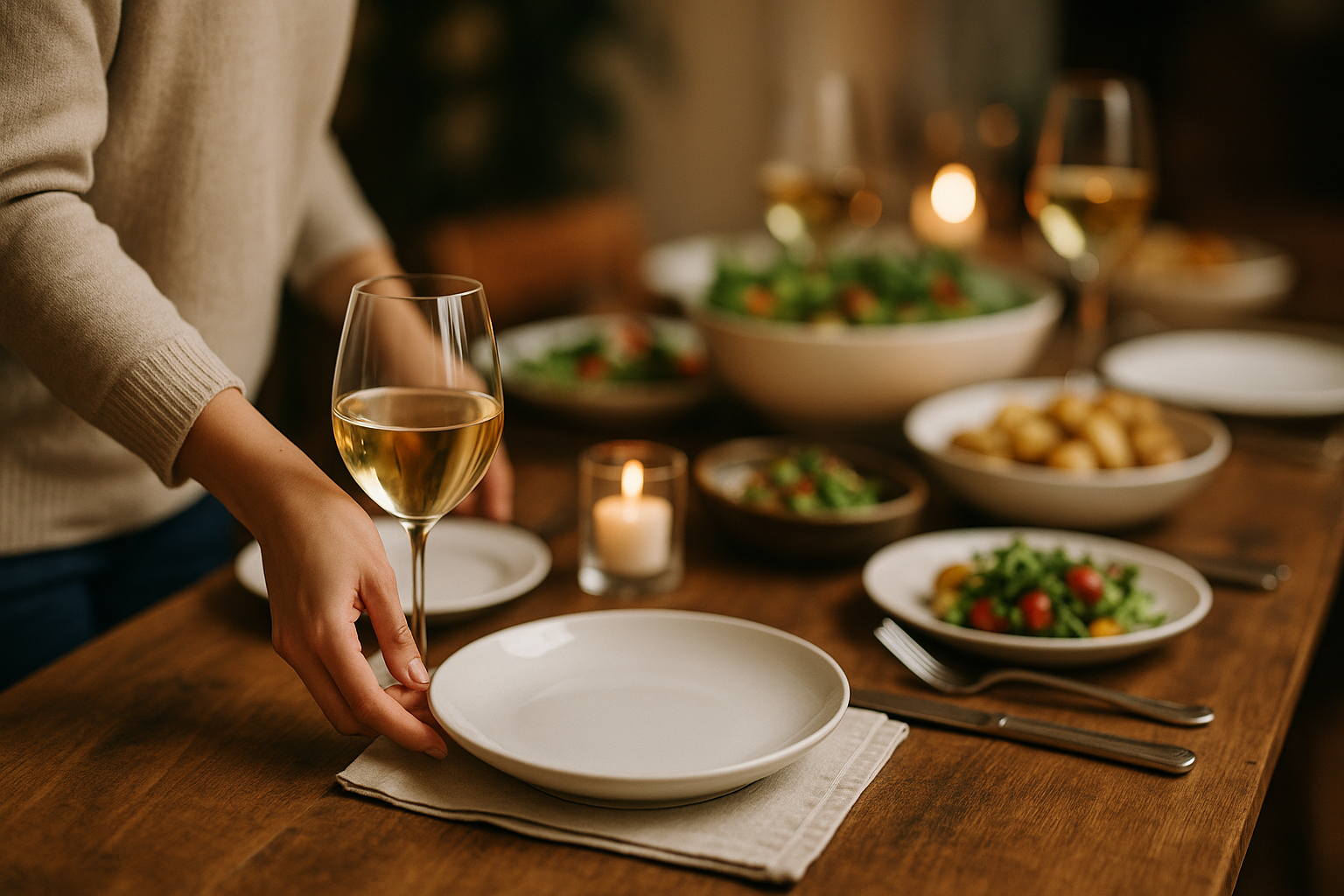
Table setting can be as simple or elaborate as you want, but certain elements matter more than others. Good lighting is crucial – too bright feels institutional, too dim makes people sleepy and makes food look unappetizing. Candles add ambiance and forgiveness (they make everyone look better), but make sure they’re unscented so they don’t compete with food aromas. Fresh flowers are lovely but optional; a clean tablecloth and matching napkins go further toward creating a polished look.
Consider your serving style too. Family-style serving, where dishes are placed on the table for people to pass, creates a relaxed, communal feeling and requires less work from you. Plated service looks more formal but means more time in the kitchen during the meal. Choose based on your menu and comfort level, not what you think you should do.
Handle Dietary Restrictions with Grace
Someone is vegetarian. Another person is gluten-free. A third can’t eat dairy. Welcome to modern dinner party hosting, where dietary restrictions are the norm rather than the exception. Instead of viewing these as obstacles, treat them as interesting creative constraints that often lead to better menus.
The key is asking about dietary needs when you invite people, not the day before your party. Frame it casually: “I’m planning the menu – any foods you avoid or can’t eat?” Most people appreciate the consideration and will give you clear guidance. Write down their restrictions immediately because you will not remember correctly later, no matter how confident you feel right now.
When planning around restrictions, avoid the separate-meal trap where you cook an entirely different dish for one person. This creates extra work and makes that guest feel like a burden. Instead, design a menu where the main components work for everyone, with restricted ingredients served on the side. For example, if someone is gluten-free, serve the sauce separately from the pasta, or offer vegan BBQ ideas that naturally accommodate multiple restrictions while satisfying all your guests.
Another smart approach is building your menu around naturally inclusive dishes. Many Mediterranean, Asian, and Latin American cuisines offer spectacular dishes that happen to be vegetarian, gluten-free, or dairy-free without any modifications. When food is delicious, nobody cares that it’s also accommodating someone’s dietary needs.
Create a Realistic Day-of Timeline
The timeline is where your planning becomes reality. Start by working backward from your serving time. If you want to serve dinner at 7:30 PM, when does your main dish need to go in the oven? When do you need to start reheating sides? When should you finish getting yourself ready? Write it all down in 15-minute increments.
Build in buffer time because nothing ever goes exactly as planned. If a dish takes 20 minutes to cook, give yourself 30 minutes in the timeline. This padding is what allows you to handle small crises without spiraling into panic. The onions are taking longer to caramelize than expected? No problem, you built in extra time. Can’t find the serving platter you planned to use? You have a few minutes to figure out an alternative.
Include personal preparation in your timeline too. You need time to shower, dress, and make yourself presentable before guests arrive. Many hosts leave this until the last minute, then answer the door sweaty and stressed, still in cooking clothes. Block out at least 45 minutes before your first expected guest to finish cooking tasks, clean up the worst of the kitchen mess, and get yourself ready. As entertaining experts suggest, how you feel when guests arrive sets the tone for the entire evening.
Stop all cooking 15 minutes before guests are due to arrive. Whatever isn’t done at that point can wait, be simplified, or be eliminated. Use those final minutes to light candles, put out appetizers, start background music, and take three deep breaths. Your calm presence matters more than perfect food timing.
Master the Essential Hosting Skills
Good hosting is less about perfection and more about making people feel comfortable and cared for. This starts the moment guests arrive. Greet people warmly, take their coats, offer them a drink immediately, and introduce them to anyone they don’t know. These first few minutes set expectations for the entire evening.
Keep appetizers simple but abundant. Hungry people get cranky, and most dinner parties run later than planned. Having substantial snacks available prevents guests from getting too hungry or too tipsy before dinner. One-pot appetizers that you can prepare entirely in advance work beautifully here – think dips, spreads, marinated vegetables, and cheese plates.
During dinner, your job is to facilitate conversation and keep things moving smoothly, not to provide constant entertainment. Ask open-ended questions that get people talking to each other, not just to you. Notice if someone is being quiet and gently draw them into the conversation. Pay attention to pacing – are people finished with one course and ready for the next? Don’t rush, but don’t let awkward pauses stretch too long either.
When something goes wrong (and something always goes slightly wrong), handle it with humor and grace. Burned the bread? Joke about it and move on. Drop a dish while serving? Clean it up quickly without making a big deal. Your guests take cues from you – if you’re relaxed about small mishaps, they will be too. Perfection is intimidating anyway; minor imperfections make people feel more comfortable.
Simplify Cleanup Without Sacrificing Standards
The prospect of post-party cleanup shouldn’t overshadow your enjoyment of the evening. Smart hosts minimize cleanup through strategic choices, not by letting their kitchen become a disaster zone. During prep and cooking, clean as you go. Wash mixing bowls while something simmers. Wipe down counters between tasks. Load the dishwasher with prep dishes before guests arrive.
Use serving dishes and platters that can go directly into the dishwasher. Those beautiful but hand-wash-only pieces might look impressive, but they’re not worth it when you’re exhausted at 11 PM. Similarly, choose a menu that doesn’t require every pot and pan you own. Applying efficient knife skills and cooking techniques means using fewer tools and creating less mess overall.
Set up a discreet station for dirty dishes, either in the kitchen or on a sideboard. As you clear courses, stack dishes neatly there rather than making multiple trips or leaving them scattered. If your dishwasher is empty before the party, you can load it quietly between courses. Don’t obsess over clearing plates the instant someone finishes – wait until most people are done with each course.
After guests leave, resist the urge to do everything immediately. Put away perishable food, load the dishwasher, and do a quick surface clean so you don’t wake up to a nightmare. Everything else can wait until tomorrow when you’re rested. Future you will appreciate past you for covering the basics without trying to restore the kitchen to pristine condition at midnight.
Embrace Imperfection and Enjoy Yourself
The truth that separates anxious hosts from confident ones? Your guests don’t expect perfection, and they certainly don’t want you stressed and miserable. They came to spend time with you, not to judge your tablecloth choices or notice that the sauce is slightly thinner than intended. The evenings people remember fondly are the ones where everyone relaxed and enjoyed each other’s company, not the ones with the most technically impressive food.
Give yourself permission to take shortcuts that free up your time and energy. Buy the fancy bread instead of making it from scratch. Use store-bought puff pastry for that impressive-looking tart. Serve a beautiful store-bought dessert without apology. The “from scratch” police are not coming to your dinner party, and even if they were, they’d be too polite to say anything.
During the party, remember that you’re a guest at your own table too. You should get to eat warm food, participate in conversations, and enjoy the evening you worked hard to create. Don’t spend the entire meal jumping up to fuss over details. People would rather have a relaxed host who occasionally lets a water glass go unfilled than a stressed-out one who never sits down.
The most successful dinner parties happen when you focus on what really matters: good food (not perfect food), genuine hospitality, and creating an atmosphere where people feel welcome and comfortable. Everything else is just details. Trust that your preparation was sufficient, believe that your guests are happy to be there, and give yourself credit for bringing people together around your table. That’s the real accomplishment, and it has nothing to do with whether your risotto was perfectly al dente or your napkins were properly pressed.

Leave a Reply